
The Challenge
Imagine being an expectant mother excited for your baby’s arrival. When you go into labor, you know you need medical care to ensure a smooth delivery, but you’re located in a remote area. Ambulances can’t easily drive on the roads to your community, and traveling on foot isn’t an option. What do you do?
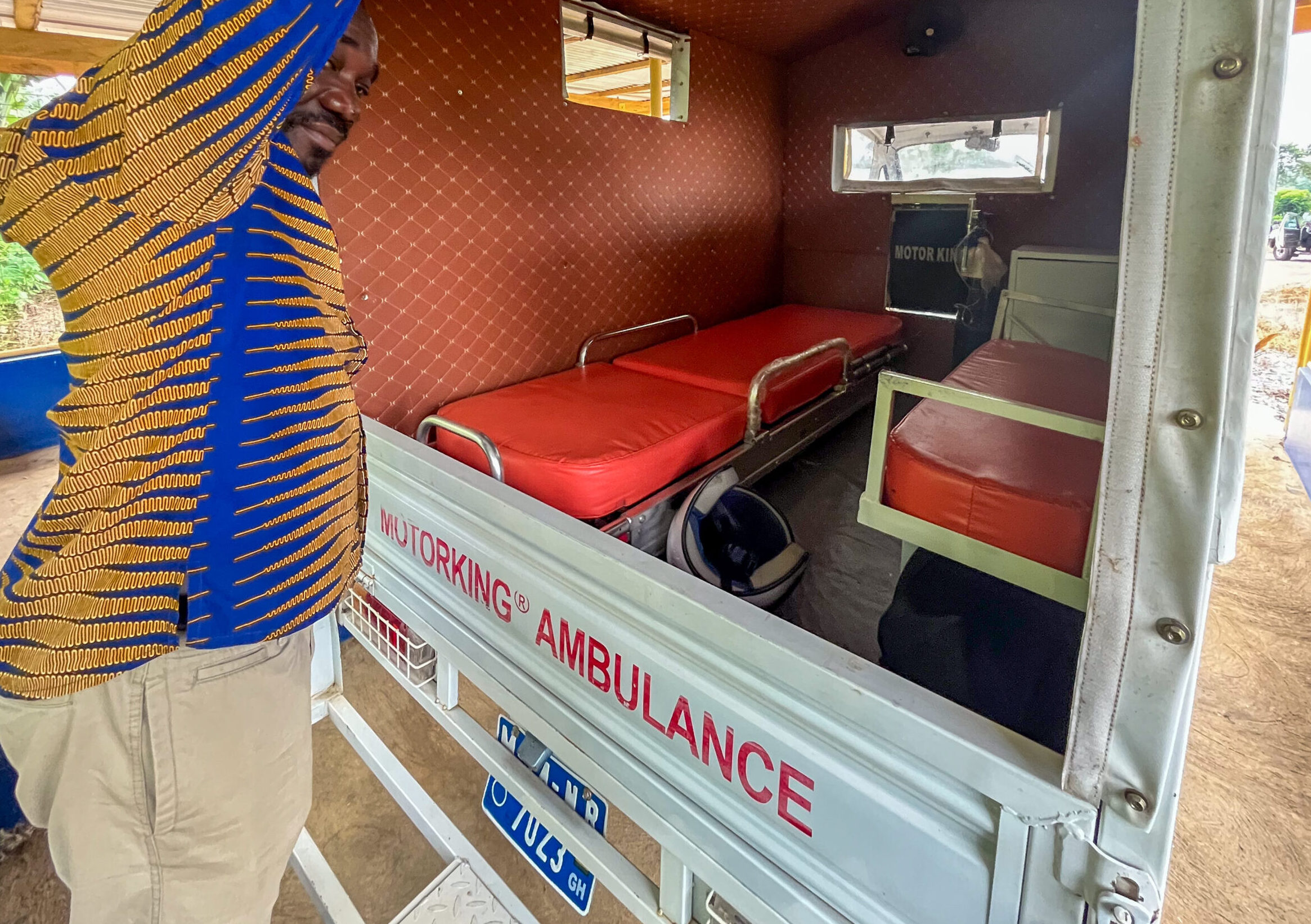
In Ghana, long distances to medical facilities and underdeveloped infrastructure often stand between people and the care they need. When the communities we work with in the Eastern Region were asked to develop a solution, they responded that motorcycles and moto-ambulances could create that critical link to the health facilities, even on roads impassable by car.
With support from The Hunger Project-Ghana and The Church of Jesus Christ of Latter-day Saints, that community-driven vision became reality.
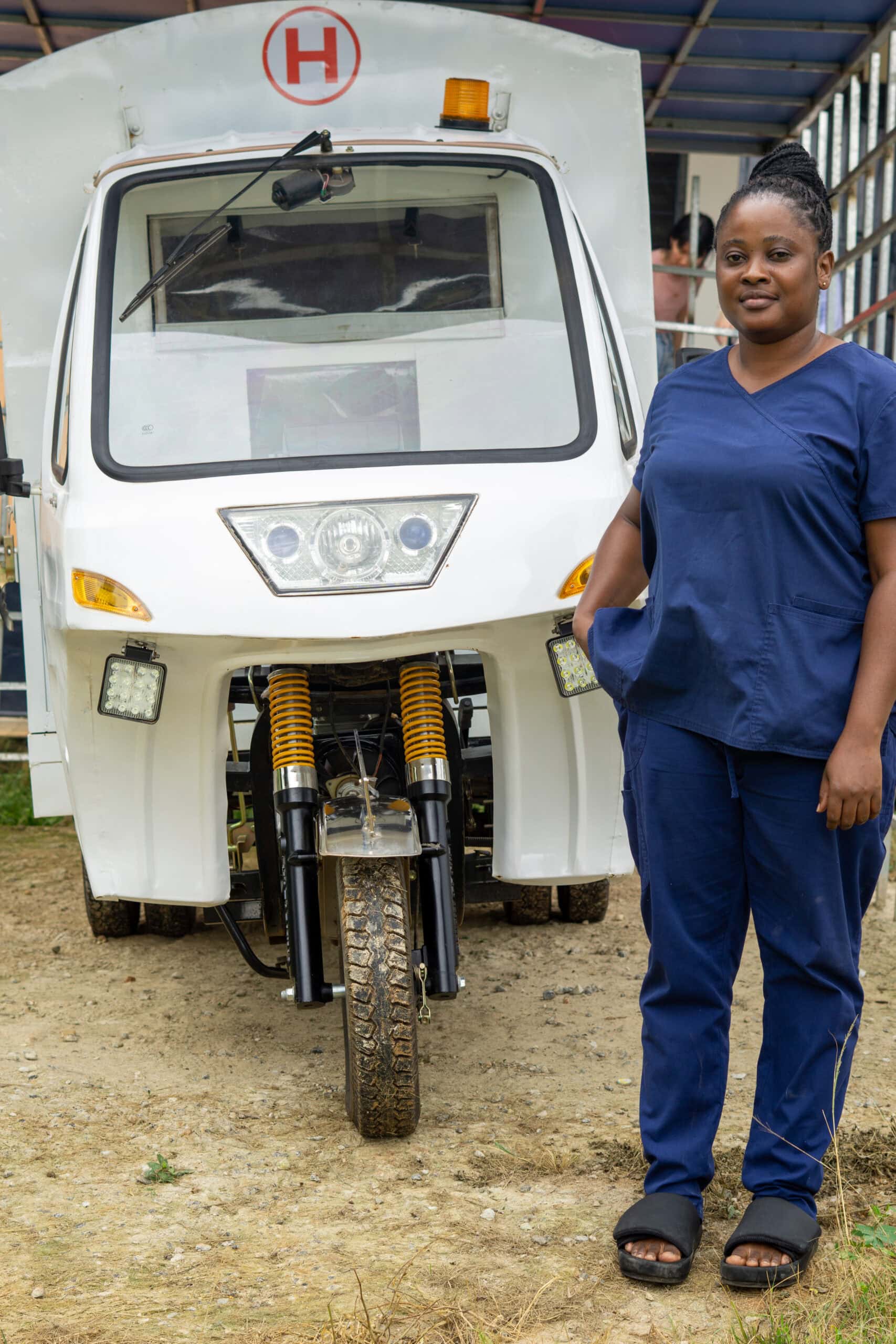
In partnership with the Ghana Health Service, the National Ambulance Service and Catholic Relief Services, 11 motorcycles will be deployed across several districts and municipalities in Eastern Ghana. The vehicles will enable medical personnel to conduct outreach services, visit pregnant women and newborns in their homes, support immunization campaigns and respond quickly to emergencies. By improving mobility for these professionals, women and children will have more consistent access to the health services that will help them thrive.
A Community-Led Solution for Systems Change
This effort is part of the Holistic Opportunities for Positive Engagement in Maternal and Child Health (HOPE-MCH) Project, which seeks to improve the systems of care available to children under 3, their mothers and pregnant women. The goal is to improve access and utilization of maternal and newborn services in Ghana to give moms and babies the opportunity to thrive during this critical stage. We are working closely with the Ghana Health Service, National Ambulance Service and district systems, so that this service can be carried out well after the program ends.
Agatha Quayson, Country Leader of THP–Ghana, reaffirmed THP’s commitment to improving healthcare access for communities.
At The Hunger Project–Ghana, we believe that safe motherhood is a fundamental right. We are proud to support the Ghana Health Service in strengthening healthcare delivery systems, particularly in hard-to-reach communities where timely access to care can make the difference between life and death. These motorcycles will empower health workers to respond to emergencies with the urgency they deserve.
The motorcycle initiative builds on broader HOPE-MCH Project efforts currently underway. Earlier this year, THP-Ghana equipped local healthcare facilities with medical equipment and supplies to support access to services and strengthen patient care.
Strengthening Local Health Care
For decades, THP’s Epicenter Strategy has played an important role in advancing community health care in Ghana.
Across Ghana, many of the 35 epicenters, or community-led hubs serving clusters of rural communities, host government-serviced Community-based Health Planning and Services (CHPS) compounds that bring critical health services closer to the people who need them most.
Dr. Damien Punguyire, Eastern Regional Director of Health Services, welcomed the additional transportation resources. He stated that improved mobility will enhance outreach efforts, strengthen supervision within CHPS zones and contribute to improved maternal and child health outcomes.
Healthier, More Resilient Communities
At The Hunger Project, we believe that all people have the right to access resources that can help them live better and more independent lives. By investing in practical solutions identified by communities that strengthen local health systems, people across Ghana are helping create the conditions for healthier communities and ensuring that more women and children can access the care they need, regardless of where they live.
Photo credits for images above: Ghana 2025. All photos are for The Hunger Project.