How Nasima is Bridging Access to Health, Nutrition and WASH Services in Rural Bangladesh
What happens when the work you do with a community becomes the foundation for a business of your own?
For Nasima Khatun, this meant taking years of community health work and turning it into a new way of reaching families in rural Bangladesh.
Nasima began her career as a local school teacher, funding her own education and earning a bachelor’s degree. She later joined The Hunger Project-Bangladesh as a Community Nutrition Mobilizer, drawing on her knowledge of the community to connect remote and marginalized families with primary healthcare, maternal nutrition advice and water, sanitation and hygiene (WASH) services.
To ensure the continuity of maternal and child health services, The Hunger Project-Bangladesh shifted its approach from direct subsidies to long-term local capacity and self-reliance. Building on this model, Nasima received training in business management, financial literacy, and supply chains through The Hunger Project-Bangladesh and the Entrepreneur Network, transforming her community health expertise into an independent social enterprise that distributes essential nutrition and sanitation products.
Within her first few weeks, Nasima’s business was reaching seven to eight remote villages each week and had generated more than BDT 28,000 ($223.97 USD) in product and service transactions.
Bringing Health Services Closer to Home
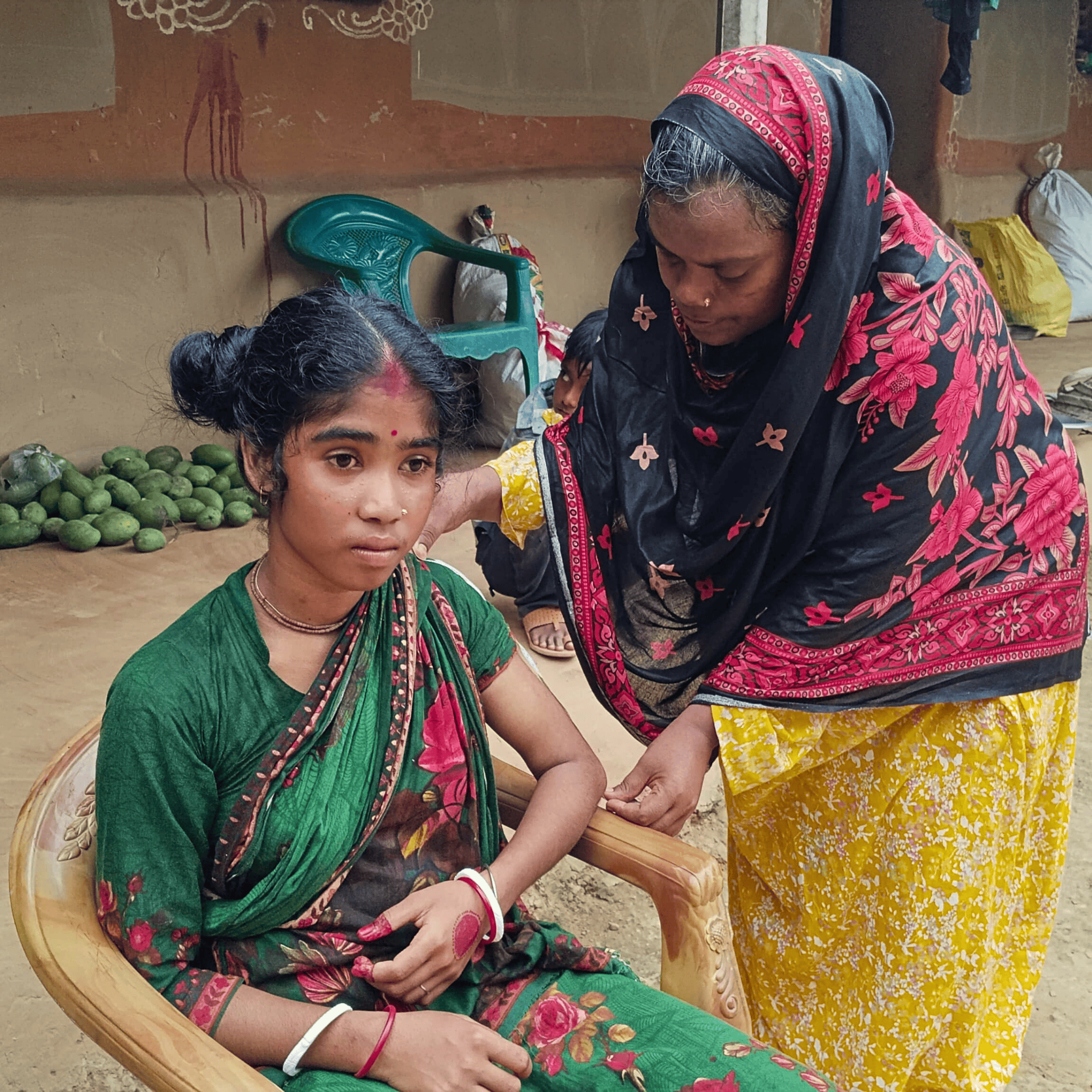
Nasima provides mobile hemoglobin testing, blood pressure monitoring for pregnant women and adolescent girls, mid-upper-arm circumference screening and diabetes testing.
She also provides families with access to micronutrient supplements, multivitamins and oral rehydration salts. Women and girls can also purchase sanitary napkins and other hygiene products.
Her work brings services and products closer to families who may otherwise have difficulty accessing them, while creating an income-generating business for Nasima.
When Local Expertise Becomes a Livelihood
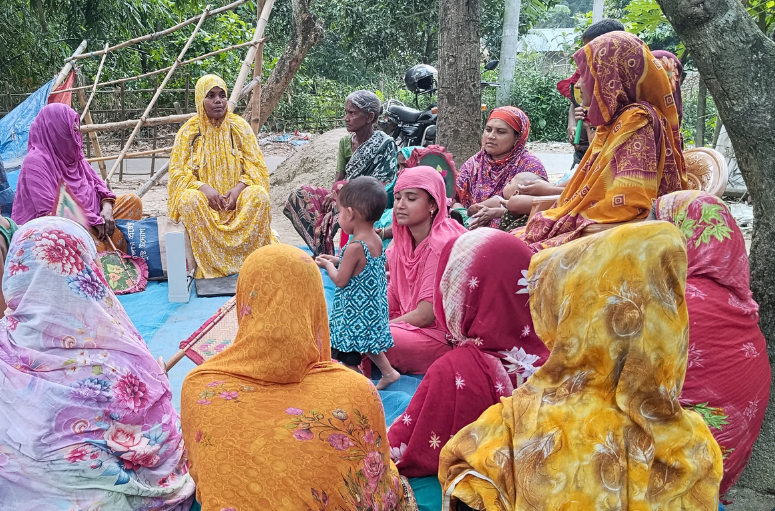
Nasima’s community health expertise is now at the center of her business.
The profits have helped her build a home, fund her son’s education and provide long-term economic stability for her household.
Her story raises a broader question about sustainability:
What happens when local expertise is not simply used to deliver a project, but becomes the foundation for something that can continue beyond a funding cycle?
A Community-Led Approach
Nasima’s experience is one example of how The Hunger Project-Bangladesh and its partners are supporting community-based approaches to health, nutrition and WASH.
The Hunger Project-Bangladesh implements the Integrated Nutrition, Health, and WASH Services Empowerment Project, with technical and network partners including the Global Alliance for Sustainable Nutrition and the Entrepreneur Network, and funding from The Church of Jesus Christ of Latter-day Saints.
Photo credits for images above: Bangladesh, 2026. All photos are for The Hunger Project.