Uganda
Hunger in Uganda
Uganda is a country of immense agricultural potential and natural wealth—yet hunger remains a daily reality for millions of people. Despite progress, more than four in ten Ugandans live in poverty, and nearly half of all households face food insecurity.
In regions like Karamoja, hunger is especially acute, driven by a combination of poverty, gender inequality, environmental issues like climate shocks, and limited access to basic services. This persistent crisis undermines health and education but also threatens Uganda’s sustainable development.
Our Work in Uganda
The Hunger Project has been actively engaged in Uganda since 1999. In 13 districts, we are mobilizing communities to overcome hunger and poverty through sustainable development initiatives.
Through our Epicenter Strategy, we work with empowered individuals and communities to take the reins of their own development and unlock local capacity for change. Together, we holistically address the root causes of hunger in their lives and facilitate access to the essential services needed to lead lives of self-reliance.
Program Highlights
Active Epicenters
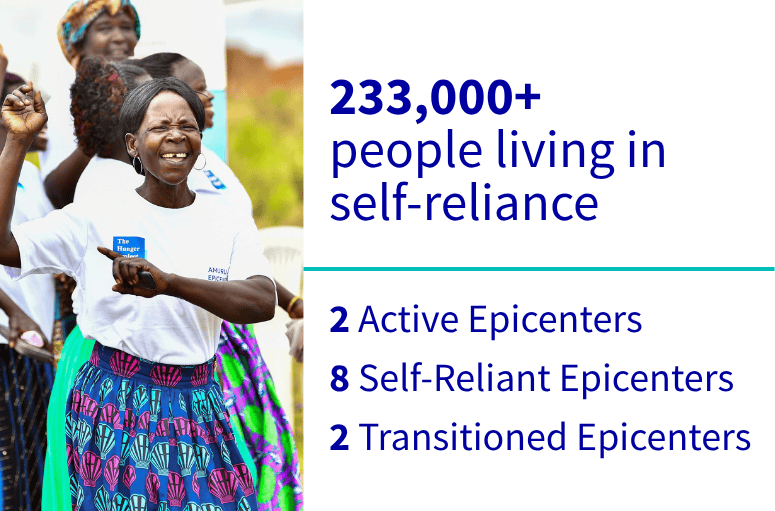
In Uganda, there are two active epicenters working toward self-reliance. Additionally, we are implementing nutrition programs in two self-reliant epicenters.
Oruka Epicenter is located in Nwoya District, Northern Uganda and was launched in 2022. Serving the Acholi sub-region, which endured decades of conflict, Oruka fosters community transformation through healthcare, economic empowerment and access to clean water.
- The Health Center III facility addresses common health issues in Uganda and serves an average of 10,000 patients annually. It provides a safe, local place for pregnant women to deliver.
- The Oruka Epicenter Savings and Credit Cooperative has grown to 543 members, providing financial services, training, and business support.
- Eleven villages in the epicenter area were connected to clean water, supporting the health and hygiene of 5,000 people.
- Finally, our food security program at the epicenter focuses on improving market access and economic stability for its 373 members.
Amuru Epicenter is our newest epicenter in Uganda and was launched in 2024. It is located in Amuru District, Lakang Sub-county and covers seven villages with a population of 26,013 people. Through our Water-First Project, the community has launched a solar mini-piped water system to serve approximately 667 households in Ochipi A and Ochipi B villages to improve clean water access in the epicenter operation areas.
Through these initiatives, The Hunger Project-Uganda is bringing essential services closer to the people, fostering long-term transformation.
Fostering Youth Entrepreneurship
Uganda has a very young population. 77% of the people are under 35 years old. Many young people are un- or underemployed, denied access to resources and opportunity that would build self-reliance.
To improve the income opportunities and living conditions of young people in rural Uganda, we have developed a tailored youth agribusiness training curriculum and we are establishing youth agribusiness academies across seven districts. Through these vocation and entrepreneurship trainings, we aim to strengthen access to agricultural markets for youth and support them to build successful agribusinesses that generate sustainable income.
Community Nutrition
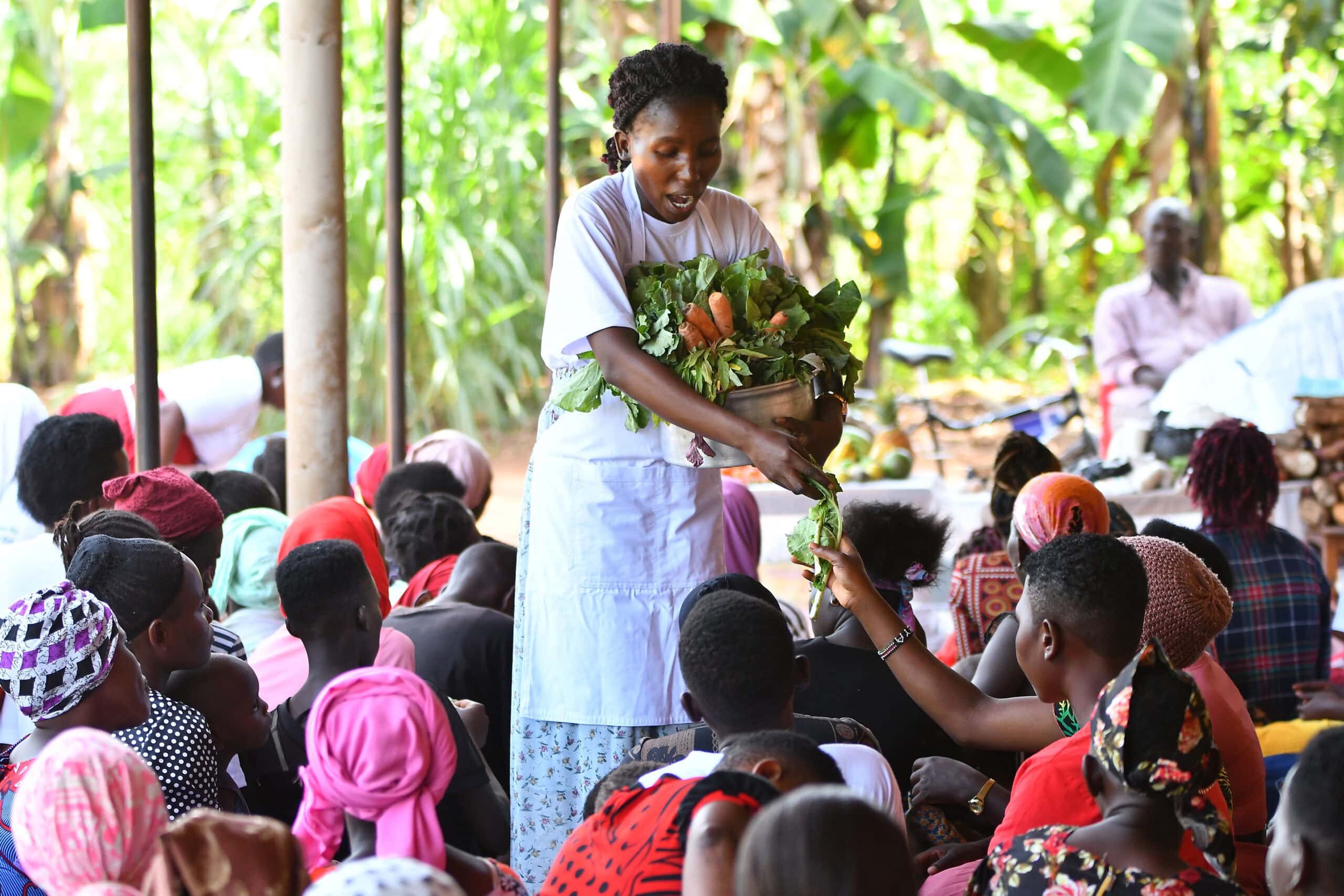
Through the Global Alliance for Sustainable Nutrition, a multi-country initiative implemented in 11 Hunger Project Program Countries, we are working to ensure sustainable nutrition for mothers and children under five years old. In Uganda, the project operates in Iganga and Butambala districts, directly reaching over 62,000 community members. Mother Clubs, led by trained Village Healthy Team volunteers, mobilize, sensitize, and train mothers on maternal and child nutrition, proper childcare, and WASH practices.
The project has significantly contributed to child nutrition. We have reached over 29,500 children with deworming medications and Vitamin A supplements. Additionally, the initiative supports school feeding programs in several schools, ensuring children receive at least one nutritious meal per day. To sustain this effort, schools have established school gardens and teachers and parents receive training on child nutrition and WASH. These interventions have led to improved school attendance, reduced dropout rates, and better overall child health.
Advancing Nutrition Policy and Practices
In 2025, we are completing the Right2Grow program, a five-year project implemented in six countries to ensure that all children are well nourished and that everyone has access to optimal Water, Sanitation, and Hygiene (WASH). In Uganda, the project is implemented by a consortium of nine civil society organizations with The Hunger Project-Uganda as the lead partner. Funded by the Netherlands Ministry of Foreign Affairs, the project operates in 10 districts.
The project fosters community advocacy for improved nutrition, WASH and food security services by using community-led engagement models, such as our signature Vision, Commitment and Action Workshop to amplify community voices and drive policy change.
Through this program, we have strengthened community and government structures by supporting the formation and functionality of CSO Nutrition Platforms as well as Sub-County and District Nutrition Coordination Committees. We identified and trained 144 local leaders who are leading advocacy efforts that have resulted in new by-laws on food security, nutrition and WASH in their respective communities. Training and equipping community structures and local leaders has fostered long-term advocacy efforts to improve service delivery.
At the national level, we have contributed to key policy processes, including advancing the Food and Nutrition Bill, in collaboration with the Uganda Parliamentary Alliance on Food and Nutrition Security. We are also working closely with the Ministry of Trade, Industry and Cooperatives to strengthen multi-sectoral partnerships that support food and nutrition security.
Improving Access to Clean Water
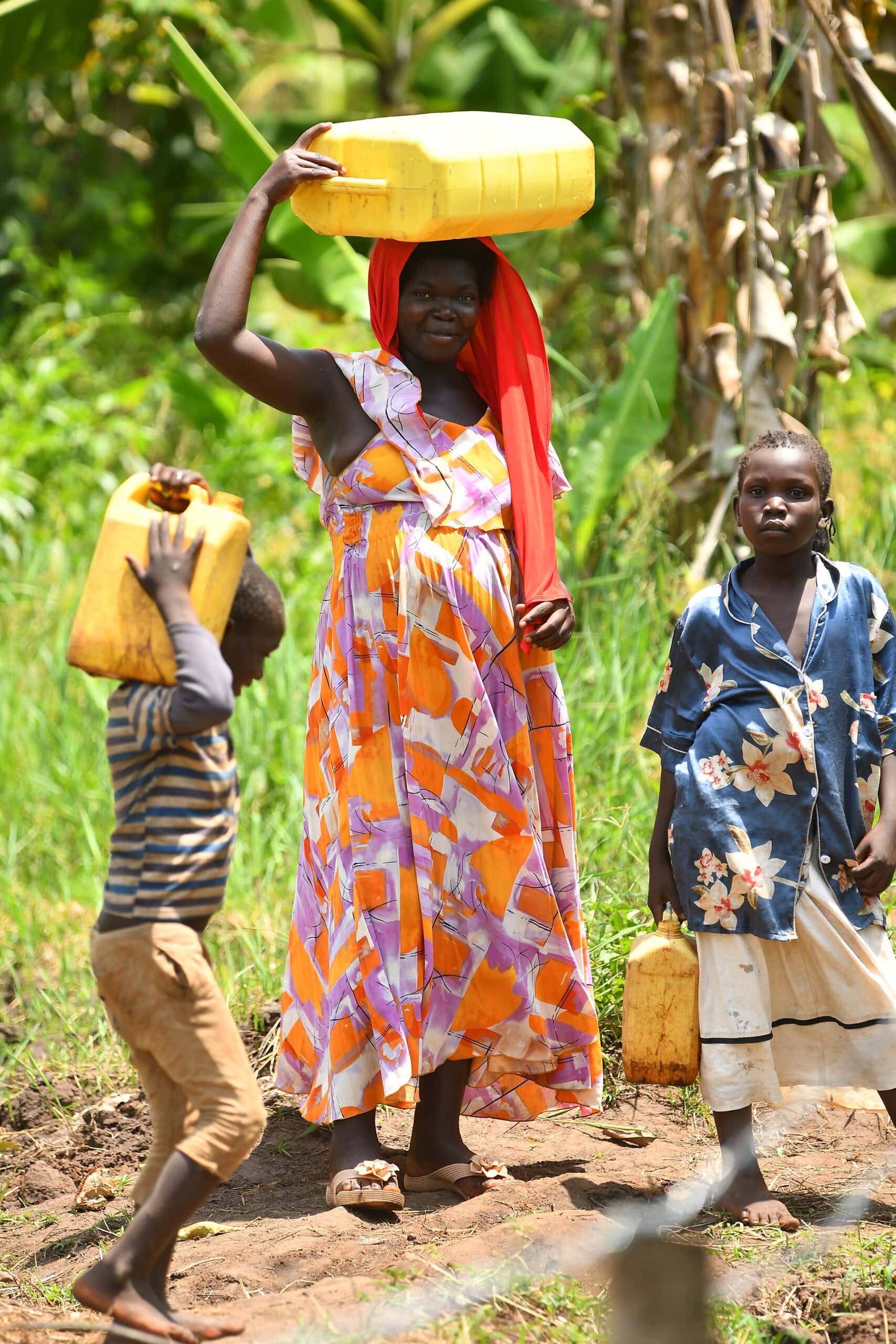
Clean water is essential to creating a world without hunger. In Uganda, only 58% of the population has access to at least basic drinking water services, and just 19% have access to safely managed sanitation services, according to the WHO and UNICEF Joint Monitoring Programme. Inadequate sanitation and limited access to clean water increase the prevalence of diarrhea, malaria, and other diseases. Clean water enables safe food production, supports nutrition and health, and strengthens the resilience of communities to grow and prepare their own food.
To address ongoing challenges with access to clean water and sanitation, we are working in in partnership with Petre Foundation and Water First in Nwoya, Iganga and Amuru districts to drill boreholes with hand pumps and mini-piped tap water systems and repair existing boreholes that were not functional. Local volunteers, called animators, conduct trainings to ensure that the community is equipped with the knowledge to maintain and manage these water sources sustainably.
The Hunger Project
P.O. Box 26393
Kampala, Uganda
Phone: +256 414 232 060
Fax: +256 414 232 236
Team

News

Make change happen. Invest in people.
Mailing address
The Hunger Project
110 West 30th Street, 6th Floor
New York, NY 10001
Get connected
Join the conversation on social, and stay connected with the latest from our partners around the world.
Stay informed
Subscribe to our newsletter to receive updates of latest news and events.




© The Hunger Project | Website by The Good Alliance